
Medications
The stack Babi and Juju actually ran and what each drug does. This documents what one household did; it is not a dosing guide.
The stack, and getting it in
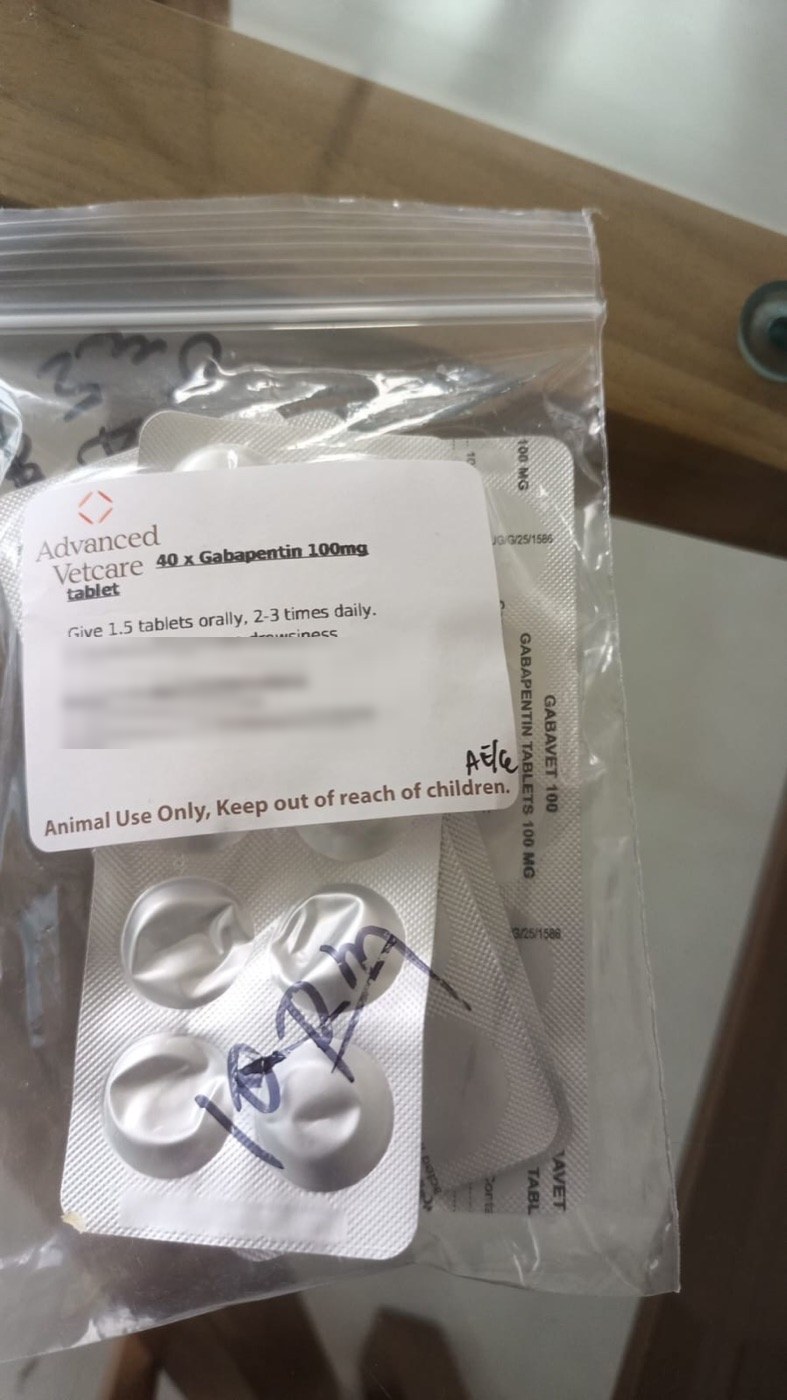
Their days were built around a stack of medications, each one doing a single job. Gabapentin for the nerve pain. Meloxicam to bring the inflammation down. Paracetamol as a gentler add-on. A fentanyl patch for the worst of the early pain. Trazodone to keep them calm enough to actually rest. Omeprazole and sucralfate to protect their stomachs from all of it. When Babi relapsed, tramadol came back in.
Getting the pills in was its own problem. Cheese wraps and pill pockets stopped working within a week. Peanut butter caused a near-choke. What finally worked, every single time, was a smear of cream cheese on a finger, pressed to the back of the throat.
Two things the stack taught us. Juju's fentanyl patch made her panting worse, not better, for a day. The bandage holding it was too tight, and once the vet loosened it she had her first real improvement. And the day after Babi was told he was doing well, he flared: shaking, crouched, panting. It turned out to be the disc next door.
What I came to understand is that none of these drugs were the cure. They made the rest possible, for the dog and for us, and the rest is what the guidelines back.
What each drug does, and why
Gabapentin
Nerve (neuropathic) painWorks on the α2δ subunit of calcium channels to calm nerve pain, the kind a compressed disc causes. It clears the body quickly, so your vet sets a schedule that keeps the pain covered. If pain comes back before the next dose is due, tell your vet the same day.
KuKanich & Cohen 2009; Ruel et al. 2020
Meloxicam
InflammationA COX-2-preferential anti-inflammatory (an NSAID). It brings down the swelling around the injury. It is risk-managed, not risk-free, with cautions for the gut, kidneys, and liver, which is why it is time-limited and given with food.
Metacam product insert; Monteiro-Steagall et al. 2013
Paracetamol
Add-on pain reliefA milder pain reliever used short-term alongside the others. It has a hard ceiling because of the load it puts on the liver, so it is dosed conservatively and not for long.
Sartini et al. 2021
Fentanyl patch
Sustained strong pain reliefA skin patch that releases opioid pain relief slowly over days, used for the worst of the early pain. It takes hours to reach full effect. In a neck patient the bandage tension matters, and a used patch is a disposal hazard around other pets and children.
Hofmeister & Egger 2004; Reed et al. 2011
Trazodone
Rest compliance, not painNot a painkiller. It lowers anxiety and the urge to move, which is the whole game in conservative recovery: a calmer dog actually rests, and strict rest is what the guidelines back.
Gruen et al. 2014
Omeprazole + sucralfate
Stomach protectionAdded to shield the gut from the rest of the stack. Sucralfate coats and has to be spaced at least two hours apart from the other medications, or it blocks their absorption.
Marks et al. 2018 (ACVIM consensus)
This page describes the stack one household ran and what the evidence says each drug class does. It is not a dosing guide. Which drugs, what doses, and for how long is your vet's call, individualized to your dog. Never start, stop, change, or combine medications without them.
Sources: gabapentin pharmacokinetics, KuKanich & Cohen 2009, Ruel et al. 2020; meloxicam, Metacam product insert, Monteiro-Steagall et al. 2013; paracetamol, Sartini et al. 2021; fentanyl, Hofmeister & Egger 2004, Reed et al. 2011; trazodone, Gruen et al. 2014; GI protection, Marks et al. 2018 (ACVIM consensus); strict rest, Olby et al. 2022 (ACVIM consensus). Medication stack and lived details, Babi & Juju records.