
Conservative, or surgery?
You are at the vet, or you are weighing whether it is time to go back. Someone has said the word surgery, or you are starting to wonder about it yourself. This page is what goes into that decision. It will not make the call for you. Only you and your vet, who can see your dog and the imaging, can do that. What this page can do is make you a real part of the conversation instead of a passenger in it.
The two paths
Conservative management
Strict crate rest, pain control, and time. No surgery. The disc is left to settle on its own while the body stabilises. It asks for weeks of confinement and a medication schedule you run at home. Often the first move for dogs in pain but still walking.
The honest downside: it does not always work, it can mean losing time if your dog declines, and the underlying disc is still vulnerable.
Surgery
Imaging first (MRI or CT), then a procedure to remove the disc material pressing on the spinal cord. For neck discs this is usually a ventral slot; for back discs, a hemilaminectomy. Then a recovery that looks a lot like the conservative one. Often recommended when your dog cannot walk, is declining, or conservative has failed.
The honest downside: cost, anaesthetic risk, and recurrence at the same or a neighbouring disc.
How grade changes the conversation
When the vet examines your dog, they assign a grade from 1 to 5. The grade is the single biggest factor in what they will recommend. Tap your dog's grade to see how the decision shifts.
Pain only. No weakness, no trouble walking.
Surgery is rarely the first move at this level. If conservative management fails, surgical recovery odds stay high, about 98%.
“Recover” here means the pain settles and your dog goes back to normal, not that they have to learn to walk again.
The recovery rates for the two paths come from two different groups of dogs, not the same dog measured both ways, so a higher surgical number is not the boost surgery would give your dog. At grades 1 and 2 the conservative odds are already strong, surgery keeps its cost and risks, and it stays on the table if conservative starts to fail. That is why vets usually start conservative here.
Conservative management is often the first move at this level. Surgery is usually held in reserve, for if conservative fails or the signs come back.
These recovery figures are for back (thoracolumbar) discs, where the grading is clearest. Neck disease, like Babi's, usually presents milder. Tap a grade to see how the conversation changes.
Sources: ACVIM consensus 2022 (Olby et al.); Olby et al. 2020; Jones et al. 2023 (French Bulldog deep-pain-negative series).
The numbers that matter
of French Bulldogs treated with surgery had a recurrence at some point, in one study of 127 dogs in Bern, more often after back surgery than neck surgery. Neither path is a guarantee.
The deep-pain cliff
When a dog loses deep pain perception, the odds drop sharply on both paths, surgery from about 93% to about 61%, and conservative management even further, from about 60% to about 21%. It is the steepest fall in the whole picture, and it is why your vet checks deep pain perception first.
If your dog is at grade 5, what that conversation coversCost, from our own bills
Across the whole June-to-August period we spent roughly SGD $34,000 to $36,000, about SGD $28,000 to $30,000 out of pocket after insurance reimbursed one surgery. Insurance did not cover Juju's diagnostic scan, because her policy only covered imaging if surgery followed, and she was managed conservatively. That clause is worth checking in your own policy before you need it.
See the full cost and insurance breakdownSources:recurrence, Leu et al. 2023; deep pain, Olby et al. 2020 / ACVIM 2022; costs, Babi & Juju canonical record.
We made both calls, with our two dogs.
In the same two months, with our two dogs, we ended up on both paths.
Juju went conservative. Her scan showed disc disease at several points along her spine, but she was in pain rather than paralysed, and our vet judged she had a real chance without surgery. She did. Weeks of crate rest, a medication schedule, the recovery system, and she came through it.
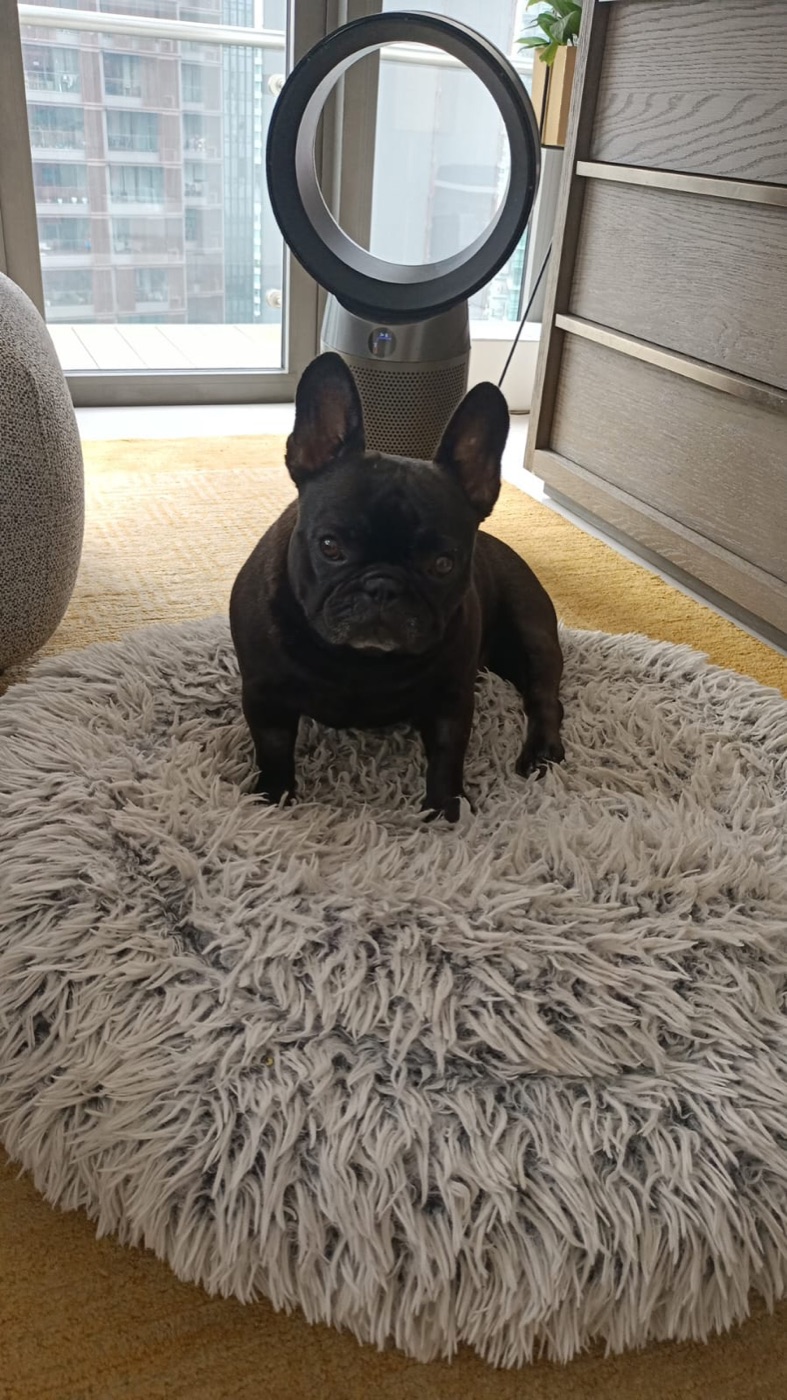
Babi went the other way. He started conservative too. His neurologist told us early that with a Frenchie it was not if but when. When he kept getting worse despite the rest and the medication, we moved to surgery. He had a ventral slot at one neck disc. Three weeks later the signs came back. When the pain broke through the medication and a front leg started to lag, the scan showed the disc next to it, and he had a second surgery. He recovered fully.
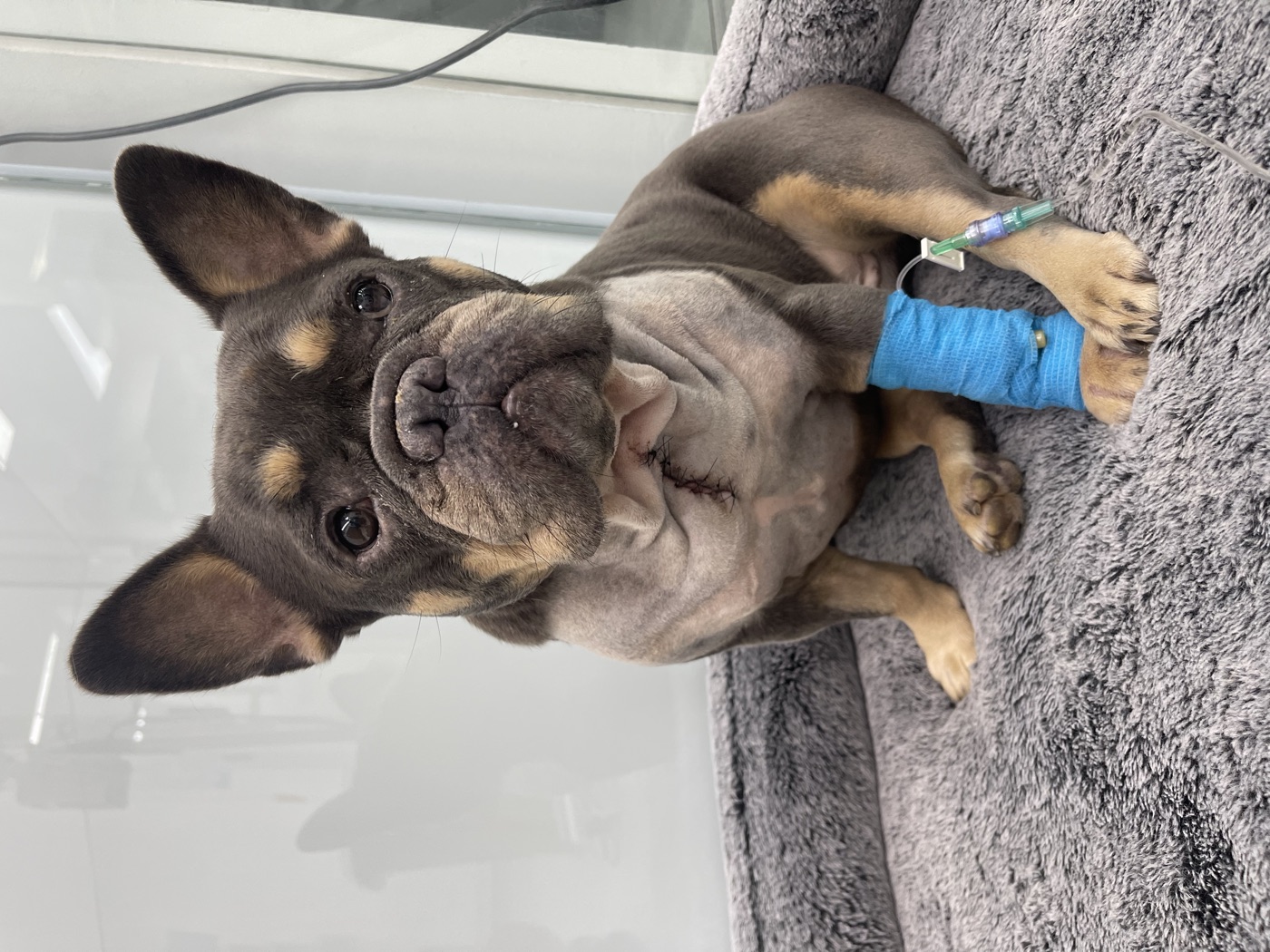
What we would tell you: going conservative first was right for Juju and reasonable for Babi, even though Babi ended up in surgery. The thing we watched hardest for, and the thing we would tell anyone to watch for, is the moment conservative management starts to fail: when the pain breaks through the meds, or the dog starts losing function despite the rest. That moment is the whole decision.
Questions to ask your vet
Screenshot this, or keep it open in the consult.
- 1What grade is my dog, and has it changed since we arrived?
- 2Does my dog still have deep pain perception?
- 3If we go conservative, what are the specific signs it is failing, and how fast should I act?
- 4If we go to surgery, what is the exact procedure, and what is the recurrence risk at that site?
- 5What does each path cost, all in, including the recovery?
- 6What happens if we wait another day?