
Photobiomodulation at home
The at-home light therapy sessions we ran, the study we followed, and an honest account of where the evidence runs out.
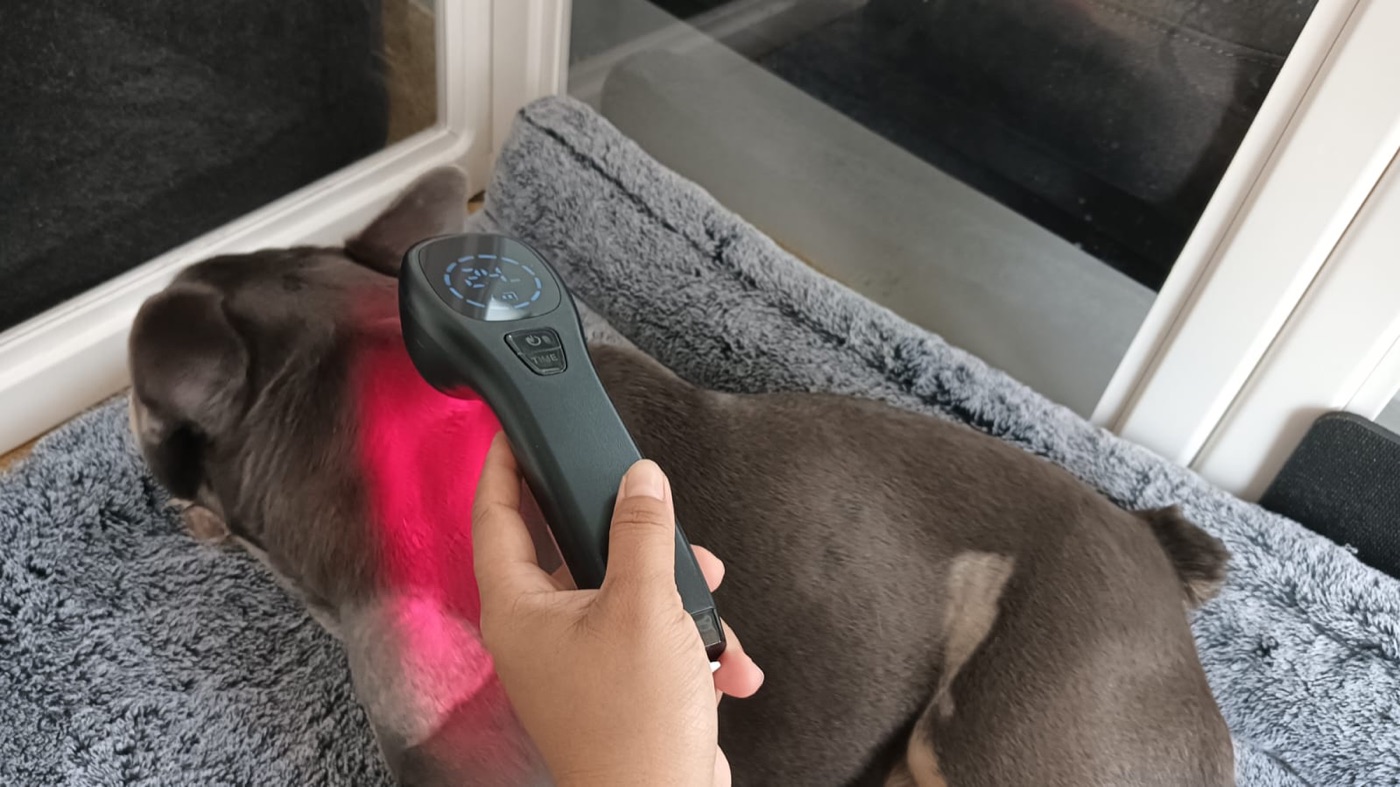
A hospital protocol, run at home
We ran photobiomodulation, a form of light therapy, on both dogs at home, following the protocol from the Bruno et al. 2020 paper as closely as we could. I read that paper more times than I can count, trying to follow it exactly on two dogs who would rather have been doing anything else. For Juju, once she had graduated off active treatment, it became a twice-weekly maintenance habit, the kind of thing you keep doing partly because stopping feels like tempting it back.
What I came to understand is that we were running a hospital study's protocol at home, on dogs who had not had the surgery that study was about. It was a reasonable bet, not a proven treatment, and it is important to me to tell you which one it was.
The study, and its limits
The anchor study, Bruno et al. 2020, looked at dogs after spinal surgery. Laser applied around the surgical site improved how quickly they walked again, but the groups were not perfectly matched, which weakens the finding. (Bruno et al. 2020)
The wider picture is genuinely mixed: one earlier study was positive but reported an odd dose, and a sham-controlled study found no benefit at all. There is no pooled analysis, and photobiomodulation is not on the routine adjunct list in the 2022 consensus guidelines. (Bennaim et al. 2017; ACVIM 2022 consensus)
- Every canine IVDD laser trial enrolled surgical dogs. There are no controlled trials in dogs managed conservatively, without surgery. Applying it that way is physiologically defensible but clinically unproven.
- There is no published evidencefor the preventive, maintenance use, which is exactly what Juju's twice-weekly cadence was. We did it; it was a rational hypothesis, not an evidence-based one.
On devices: the effective wavelength sits in the near-infrared window; cheaper red-only lights are too shallow to reach a spine. And the gap between a clinic-grade device and a home unit is large. Device classes and availability also vary by country, confirm locally.
Whether photobiomodulation suits your dog's specific injury, and which device is appropriate, is a rehabilitation vet's call, not something to start from a web page. This documents what one household did and what the literature says; it is not a recommendation to treat.
Sources: anchor study and protocol, Bruno et al. 2020; null sham-controlled result, Bennaim et al. 2017; not a routine adjunct, ACVIM 2022 consensus; the no-conservative-trials and no-maintenance-evidence caveats and device parameters, conservative-management research §7. The at-home sessions and Juju's maintenance cadence, Babi & Juju records.